What is Panchakarma? Ayurveda's Complete Detox System | Dr. Rupa Unadkat
Dr. Rupa Unadkat
5 April 2026
What is Panchakarma? — Ayurveda's Complete Detoxification System Explained
One of the most common questions patients ask at our clinic is "What exactly is Panchakarma? Can you explain it in detail?"
Everyone has heard the word. But most people do not know what Panchakarma actually involves, what happens during the process, or why it produces results that regular medicine often cannot. In this article we will go through everything in simple, clear language.
First — What Does Panchakarma Mean?
The word breaks down simply:
Pancha = Five | Karma = Actions or Procedures
Panchakarma literally means five main therapeutic procedures. These five form the core of Ayurveda's detoxification system.
Two Types of Treatment in Ayurveda
To understand why Panchakarma is so significant, it helps to know that Ayurveda recognizes two fundamental approaches to treating any disease:
Shamana Chikitsa — Pacification Therapy
This approach works by calming aggravated doshas using Ayurvedic medicines, fasting, and digestive therapies. It reduces symptoms and manages the condition. Think of it as calming the storm.
Shodhana Chikitsa — Purification Therapy
This is where Panchakarma belongs. Rather than simply suppressing doshas, Shodhana Chikitsa removes them from the body entirely. This is deeper, more complete healing — removing the clouds that caused the storm in the first place.
Panchakarma is Ayurveda's Shodhana Chikitsa — its complete detoxification and purification therapy.
What Makes Panchakarma Different from Regular Detox?
The word "detox" is used loosely today—juices, fasts, and supplements are all marketed as detox solutions. Panchakarma is fundamentally different from all of these.
Panchakarma works at a cellular level.
It is not simply about cleaning the intestines or flushing the digestive tract. Through its systematic process, Panchakarma reaches deep into the body's tissues and channels—purifying at the level of individual cells. This is why its effects are deep, lasting, and genuinely therapeutic.
Through Panchakarma, three dimensions of the human being are purified simultaneously:
- Body — physical tissues and channels
- Mind—mental clarity and emotional balance
- Sense organs—sharpening of perception and awareness
This three-dimensional purification is what sets Panchakarma apart from any other form of treatment or cleansing.
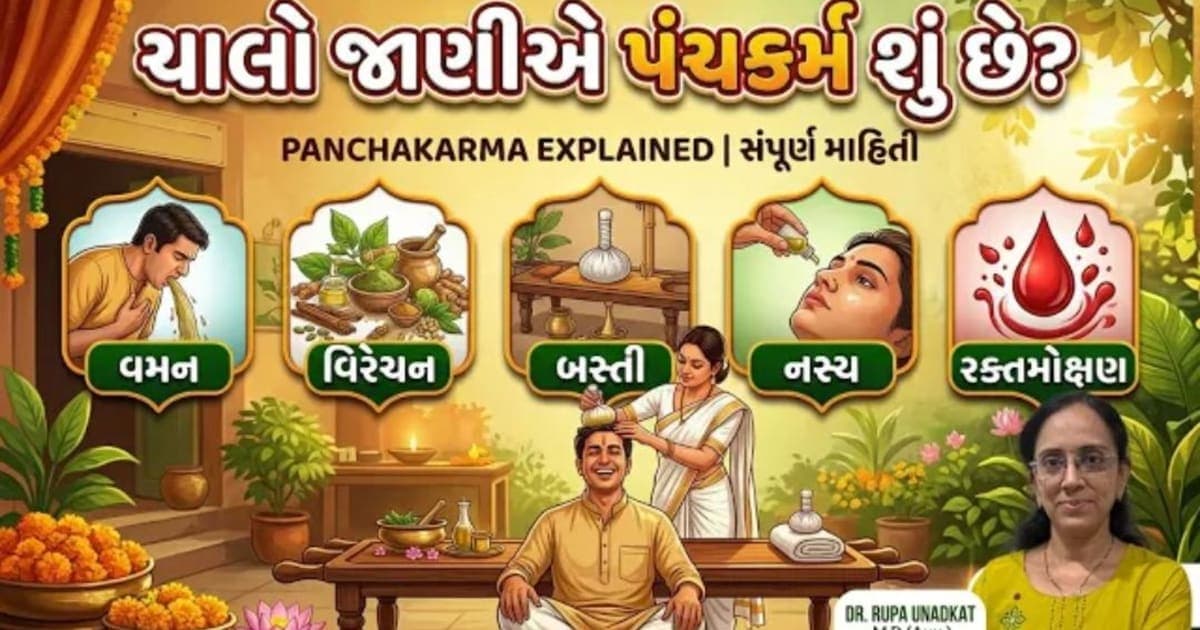
The Five Main Procedures
1 Vaman
Controlled therapeutic vomiting
2 Virechan
Controlled therapeutic purgation
3 Basti
Medicated enema through the colon
4 Nasya
Medicated oil or ghee through the nose
5 Raktamokshan
Purification and removal of impure blood
Each of these five procedures targets specific doshas and specific pathways through which accumulated toxins are removed from the body. Which procedure is used for which patient depends entirely on their condition, constitution, and the dominant dosha involved.
How Panchakarma is Done — The Three Stages
Panchakarma is not a single treatment. It is a complete structured process divided into three distinct stages. Understanding these three stages helps explain why Panchakarma produces such deep results.
Stage 1 — Purva Karma (Preparation)
Before any of the five main procedures can begin, the body must be prepared. This preparation stage is called Purva Karma.
The purpose is to loosen aggravated doshas from where they have accumulated deep in the tissues and move them toward the digestive tract—so that the main procedures can then expel them effectively.
Purva Karma includes two key processes:
Snehana—Oleation
Oil is given to the body in two ways. Externally through Abhyanga—a thorough therapeutic oil massage that softens tissues and begins loosening toxins. Internally through Snehapana — drinking medicated ghee or oil in increasing doses over several days, which softens and lubricates the deeper tissues and channels from inside.
Swedana — Steam Therapy
After oleation, herbal steam is applied to the body. This heat causes sweating, opens the channels, and drives the loosened doshas from the peripheral tissues into the digestive tract—ready to be expelled through the main procedures.
💡 Think of it this way: Snehana and Swedana work like soaking a stubborn stain before washing — they loosen what is stuck deep inside so the main procedure can remove it completely. Skipping this stage would make the main procedures far less effective and potentially too harsh on the body.
Stage 2 — Pradhan Karma (Main Procedures)
This is the core detoxification stage where the five main procedures are performed. The specific procedure used depends on the patient's individual condition and dosha dominance.
1. Vaman Karma — Therapeutic Emesis
Vaman is the first and one of the most important of the five procedures. The patient is given specific Ayurvedic herbal decoctions and liquids to drink. These induce controlled, therapeutic vomiting that expels excess Kapha and associated toxins through the upper pathway.
This is not the uncontrolled, distressing vomiting of illness. Vaman is a precisely administered and monitored procedure—the vomiting is controlled, has a clear beginning and end, and stops naturally once the therapeutic purpose is achieved.
Vaman is primarily used for Kapha-related conditions—respiratory disorders, obesity, chronic skin conditions, and other Kapha diseases.
2. Virechan Karma — Therapeutic Purgation
Virechan uses Ayurvedic medicines to induce controlled purgation for one day—expelling excess Pitta and associated toxins through the lower digestive tract. By evening the purgation stops naturally on its own. It is the primary treatment for Pitta-related conditions, including PCOD, skin disorders, liver issues, and digestive diseases.
3. Basti Karma — Medicated Enema
Basti involves administering medicated oil, herbal decoctions, or other Ayurvedic liquids through the rectum into the colon. It is the most important treatment for all Vata-related disorders—joint pain, back pain, neurological conditions, sciatica, and many more.
⚠️ Important: Basti is not a water enema. It is a completely different therapeutic procedure using specifically prepared Ayurvedic medicines. The two must not be confused.
4. Nasya Karma — Nasal Administration
In Nasya, medicated oil or ghee drops are administered into the nostrils. This clears the head, neck, and upper respiratory region of accumulated doshas. It is highly effective for sinusitis, chronic headaches, migraines, sleep disorders, and hair-related conditions.
5. Raktamokshan — Blood Purification
Raktamokshan involves removing impure or aggravated blood from the body through various methods. It is used for skin disorders, varicose veins, chronic inflammatory conditions, and migraine.
Stage 3 — Paschat Karma (Post-Procedure Care)
The third stage is the recovery and rehabilitation phase after the main procedures. The body has just undergone deep purification and needs carefully structured support to rebuild strength, restore digestive capacity, and maintain the results achieved.
Paschat Karma includes a graduated dietary protocol moving from light to regular food, specific Ayurvedic medicines for recovery, and lifestyle guidelines for the weeks following treatment.
This stage is as important as the main procedures themselves. Neglecting post-care reduces the depth and durability of the results.
The Three Stages at a Glance
Stage 1
Purva Karma
Oil massage + internal ghee + steam therapy to prepare the body
Stage 2
Pradhan Karma
One or more of the five main procedures to expel doshas
Stage 3
Paschat Karma
Graduated diet + medicines + rest to rebuild and stabilise
Who Can Benefit from Panchakarma?
Panchakarma is not only for people who are already unwell. It is equally powerful as a preventive and rejuvenative therapy for healthy individuals wanting to maintain optimal health, strengthen immunity, and slow the aging process.
Conditions commonly addressed through Panchakarma:
- Chronic digestive disorders — IBS, constipation, acidity
- Respiratory conditions — asthma, chronic cough, sinusitis
- Skin disorders—psoriasis, eczema, chronic rashes
- Joint and musculoskeletal conditions—arthritis, back pain, sciatica
- Hormonal imbalances—PCOS, menstrual disorders
- Metabolic conditions—obesity, diabetes, thyroid disorders
- Neurological conditions — migraine, anxiety, depression, insomnia
- Infertility — Uttara Basti specifically indicated
Panchakarma must always be done under the direct supervision of a qualified Ayurvedic physician. Every patient's treatment plan is completely individualized.
Final Thought
Panchakarma is one of the most profound and scientifically structured systems of detoxification and healing that exists anywhere in the world. It has been refined over thousands of years of clinical observation and practice.
If you have been dealing with a chronic condition that has not improved with regular treatment, or if you simply want to invest in your long-term health in the most complete way possible, Panchakarma deserves serious consideration.
The right procedures, timing, and duration for you will be determined after a thorough Ayurvedic consultation. Every patient is different — and that is exactly how Panchakarma is designed to work.
Stay healthy with the wisdom of Ayurveda. 🌿
Dr. Rupa Unadkat
Ayurveda & Panchakarma Specialist with 15+ years of clinical expertise. Passionate about sharing authentic Ayurvedic wisdom for everyday health and wellness.
Book a Consultation →